How to Drain a Hot Tub: Complete Step-by-Step Guide
*We may earn a commission for purchases made using our links. Please see our disclosure to learn more.
Draining a hot tub is an essential part of routine maintenance. Even when the water looks clear, sanitizer byproducts, minerals, body oils, lotions, sweat, and other dissolved material gradually build up. Eventually, the water becomes harder to balance and less pleasant to use, which is why a full drain and refill is necessary from time to time.
For most hot tubs using traditional chlorine or bromine systems, manufacturers commonly recommend draining and refilling about every three to four months. Heavy use, persistent cloudiness, recurring foam, strong odors, or water chemistry that refuses to stabilize can mean the water should be changed sooner. Salt-water spa systems may follow a different schedule, so always check your owner’s manual.
Draining a spa is more than opening a valve. The safest process includes shutting off power, choosing an appropriate discharge location, removing the water, cleaning the shell and plumbing, refilling correctly, and rebalancing the fresh water before use.
Key Takeaways
- Most chlorine- or bromine-treated hot tubs should be drained and refilled about every three to four months.
- Always turn the spa off at the circuit breaker before draining.
- A built-in drain works, but a submersible utility pump is usually much faster.
- Check local rules before discharging spa water onto a lawn, into a sewer, or near a storm drain.
- Use the drain cycle as an opportunity to clean the shell, filters, waterline, and plumbing.
- Refill according to your manufacturer’s instructions, often through the filter area, to reduce the chance of an airlock.
4 Useful Products for Draining and Cleaning a Hot Tub
1. Superior Pump 91250 1/4 HP Thermoplastic Submersible Utility Pump


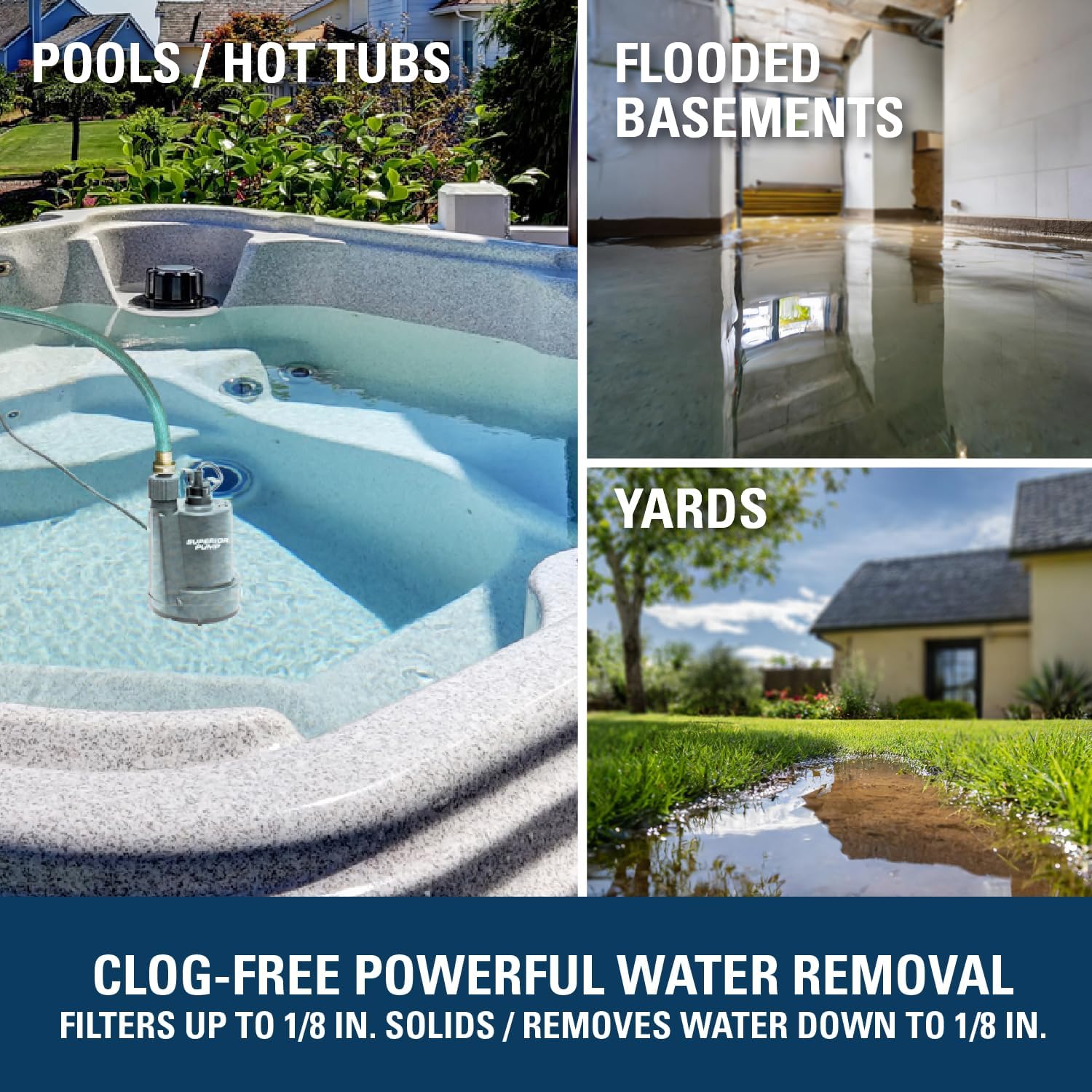
The Superior Pump 91250 is a compact 1/4 HP submersible utility pump designed for quickly moving standing water. It can pump up to 1,800 gallons per hour and lift water up to 25 feet vertically, making it useful for draining hot tubs, pools, flooded areas, and other water-removal jobs. Its durable thermoplastic housing keeps the unit lightweight, while the removable suction screen can handle solids up to 1/8 inch.
- Fast Drainage: Moves up to 1,800 gallons of water per hour.
- Garden Hose Compatible: Includes a 3/4-inch hose adapter for easy setup.
- Durable Build: Thermoplastic housing is lightweight and resistant to corrosion.
- Shorter Power Cord: The 10-foot cord may require an extension for some setups.
- Slower With Garden Hose: Using the smaller hose adapter can reduce overall flow.
- Requires Monitoring: The pump should be watched as the water level gets low.
Best for: Fast routine draining
The Superior Pump 91250 is rated for up to 1,800 gallons per hour and includes compatibility with a standard garden-hose adapter.
Its compact design makes it useful for owners who want to speed up regular drain-and-refill maintenance instead of waiting for the built-in gravity drain.
2. Green Expert 1/3 HP Submersible Sump Pump with Water Sensor
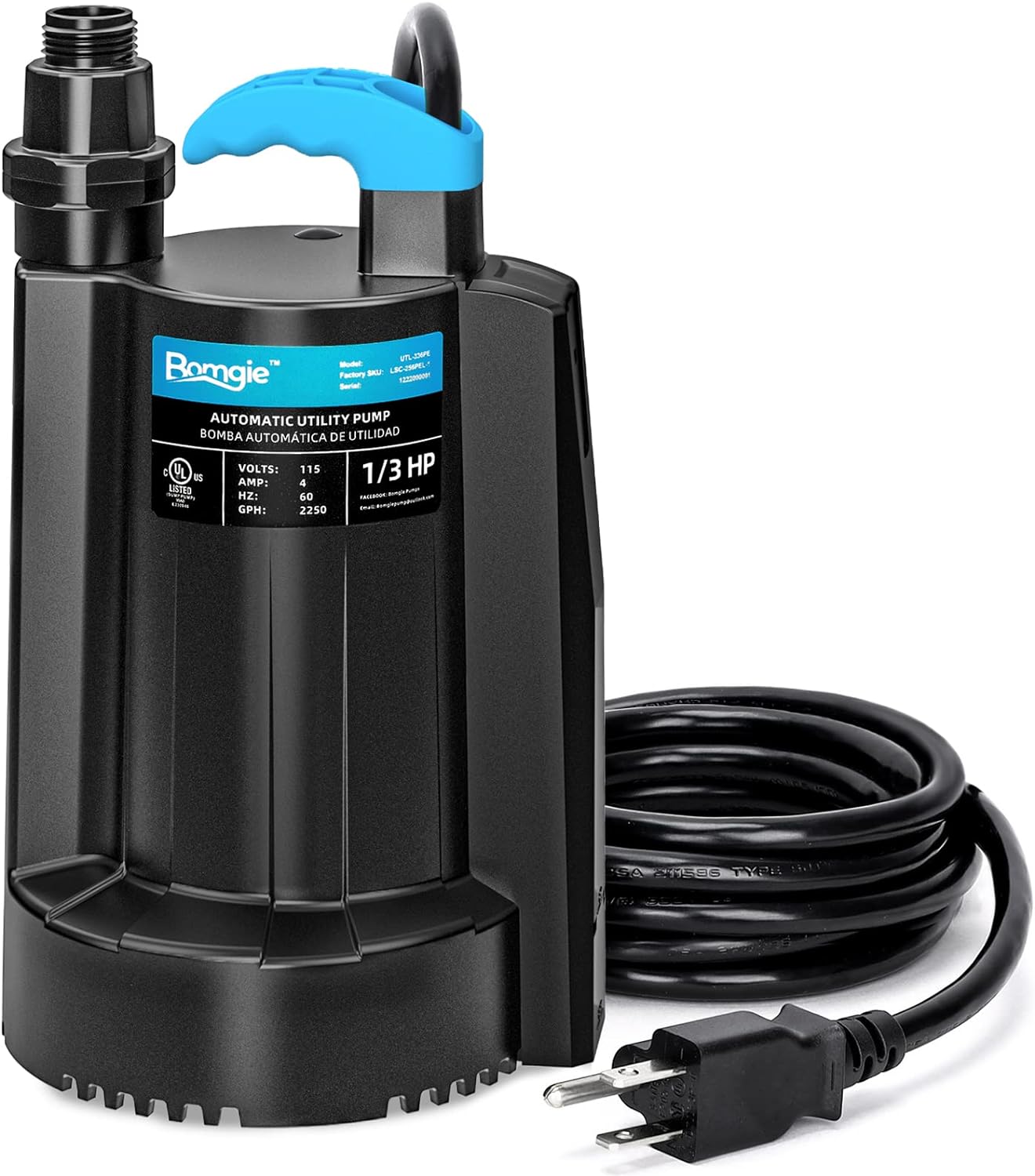


The BOMGIE 1/3 HP Automatic Submersible Utility Pump is designed for fast water removal from hot tubs, pools, basements, ponds, and other areas where standing water needs to be cleared. Its 1/3 HP motor can move up to 2,250 gallons per hour at zero lift and pump water vertically up to 33.5 feet.
- Automatic Operation: Turns on and off based on the detected water level.
- Fast Water Removal: Pumps up to 2,250 gallons per hour.
- Low-Level Drainage: Can reduce standing water to approximately 1/4 inch.
- Short Power Cord: The 10-foot cord may be restrictive for larger outdoor setups.
- Reduced Real-World Flow: Hose length and vertical lift can lower the actual pumping rate.
- Higher Price: Costs more than some basic manually operated utility pumps.
Best for: Low-water removal
This Green Expert model is rated for up to 2,000 gallons per hour and includes a water sensor with automatic operation.
Its low-water drainage design can help reduce the amount of water left in the bottom of the spa after the main draining stage. The automatic shutoff is also useful when you do not want a pump continuing to operate once the water level becomes very low.
3. Oh Yuk Healthy Hot Tub Cleaner
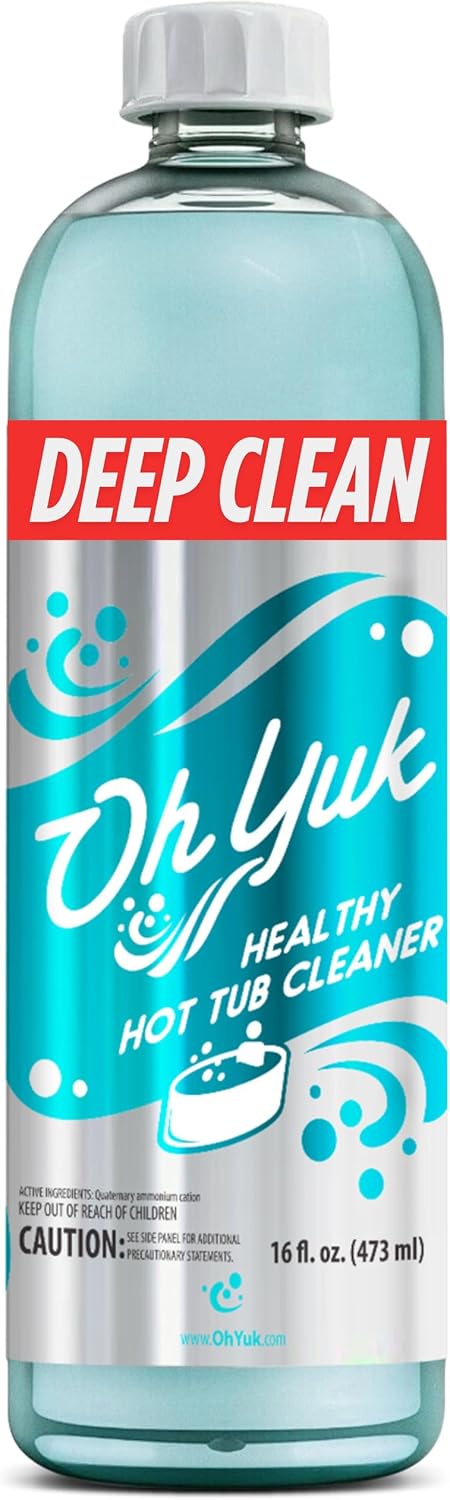
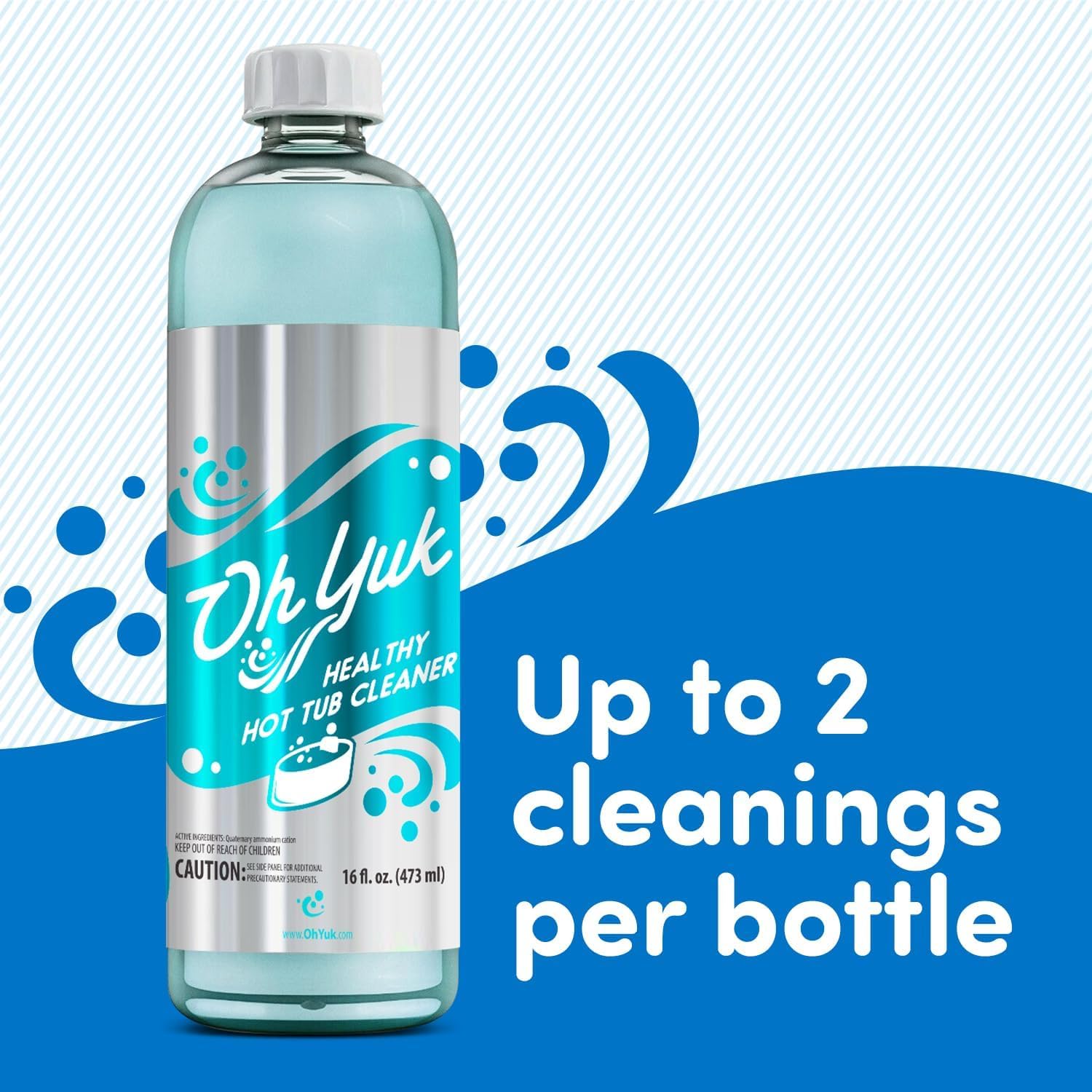
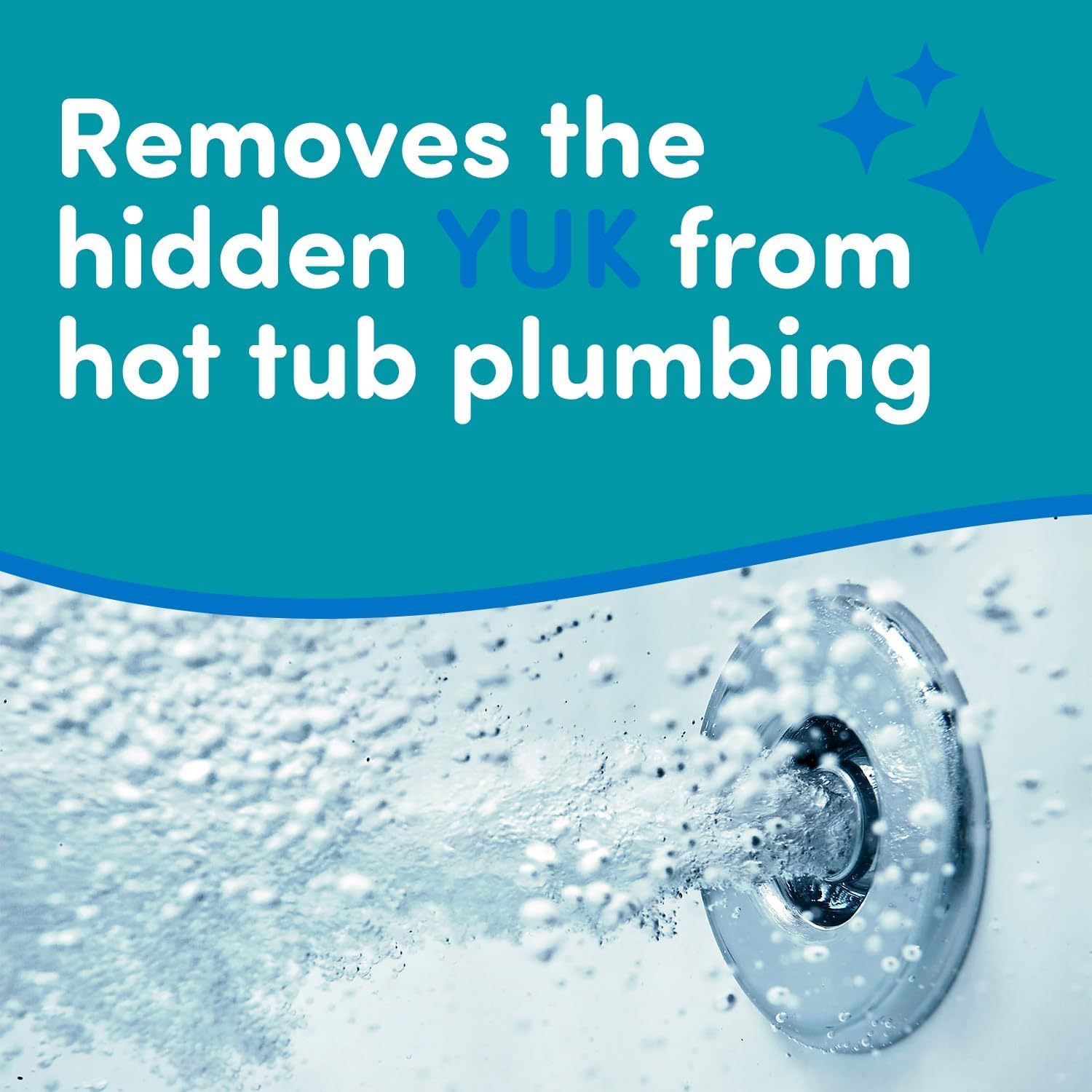
Oh Yuk Healthy Hot Tub Cleaner is a liquid plumbing cleaner designed to remove hidden buildup from hot tub jets, pipes, and circulation lines. It targets body oils, residue, and contaminants that regular sanitizers and surface cleaning may not fully remove.
- Deep Plumbing Clean: Helps remove oils and residue from jets and internal pipes.
- Improves Circulation: Cleaner plumbing can support better water flow and filtration.
- Easy Maintenance Step: Can be added before a scheduled drain and refill.
- Requires Draining: The spa water should be drained after the cleaning cycle.
- May Release Heavy Buildup: Older or poorly maintained spas may produce significant residue during use.
- Extra Maintenance Cost: Adds another product to regular hot tub upkeep.
Best for: Pre-drain plumbing purges
Oh Yuk Healthy Hot Tub Cleaner is designed to loosen residue inside hot tub plumbing before the water is drained.
The manufacturer instructs users to remove the filter, add the appropriate amount of cleaner, circulate it through the hot tub, and then drain the water. This can help remove buildup from pipes and other areas that cannot be reached by wiping the visible shell.
4. MAV AquaDoc Spa Jet Cleaner


Oh Yuk Healthy Hot Tub Cleaner is a useful option for hot tub owners who want to clean more than just the visible shell during a drain and refill. The liquid formula is designed to circulate through jets and plumbing lines, helping loosen body oils, residue, and other buildup hidden inside the spa system.
- Targets Hidden Buildup: Cleans areas inside pipes and jet lines that cannot be wiped by hand.
- Supports Water Clarity: Removing internal residue can help reduce recurring cloudiness and foam.
- Ideal Before Draining: Fits naturally into a routine hot tub drain-and-refill cycle.
- Not a Surface Cleaner: It is mainly intended for internal plumbing rather than wiping the spa shell.
- Drain Required After Use: The treated water should be removed once the cleaning cycle is complete.
- Can Create Residue During Cleaning: Loosened buildup may temporarily make the water look dirtier before draining.
Best for: Routine jet-line cleaning
AquaDoc Spa Jet Cleaner is another option for flushing buildup from internal hot tub lines before a water change.
It is particularly useful when you want your regular drain cycle to include plumbing maintenance rather than simply replacing the water and cleaning the shell.
Use only one plumbing purge during a cleaning session unless product directions explicitly state otherwise. Never mix concentrated spa chemicals together.
How Often Should You Drain a Hot Tub?
A three- to four-month schedule works for many residential hot tubs with traditional water care. Hot Spring and Jacuzzi both provide similar guidance. The exact interval depends on the number of bathers, frequency of use, sanitizer system, water chemistry, and how much organic material enters the water.
Drain sooner if you notice:
- Cloudy water that does not clear after normal treatment
- Foam that keeps returning
- Strong or stale odors
- A greasy waterline
- Water that is increasingly difficult to balance
- Slime, algae, or suspected contamination
What You Need Before Draining
Depending on your spa, you may need:
- Garden hose
- Submersible utility pump and discharge hose
- Spa plumbing cleaner
- Spa-safe surface cleaner
- Microfiber cloths or non-abrasive sponges
- Wet/dry vacuum or towels for remaining puddles
- Filter cleaner
- Water test strips or test kit
- Sanitizer and balancing chemicals
Having everything ready beforehand means you can drain, clean, and refill the hot tub without leaving the shell empty longer than necessary.
Before You Drain: Important Safety Checks
Read the Owner’s Manual
Drain fittings and refill procedures vary by model, so treat your spa manual as the final authority.
Let Very Hot Water Cool
If practical, lower the temperature first because very hot discharge water can stress plants and some surfaces.
Decide Where the Water Will Go
Local discharge rules vary. Keep water away from storm drains unless permitted, foundations, neighboring property, septic components, and erosion-prone areas.
A typical residential hot tub can hold several hundred gallons, so even a routine drain can release a significant amount of water in a short period.
Turn Off Power at the Breaker
Before the water level drops, switch the hot tub off at the Ground-Fault Circuit Interrupter (GFCI), disconnect, or circuit breaker.
Pumps and heaters can be damaged if they operate without enough water.
How to Drain a Hot Tub Step by Step
Step 1: Purge the Plumbing
A drain-and-refill is a convenient time to clean oils and residue from plumbing you cannot reach by hand.
If you use a plumbing purge, add it while the spa is still full and follow the label exactly. Some products require you to remove the filter before circulation.
Run the cleaner through the plumbing for the recommended amount of time so it can loosen residue from jet lines and pipes.
Once the purge cycle is complete, shut off the spa at the breaker.
Step 2: Remove and Clean the Filters
Take out the filter cartridges. Rinse between the pleats with a garden hose, and use a cartridge-cleaning product if they need deeper cleaning.
Replace cartridges with torn pleats, cracked end caps, or deposits that cannot be removed.
Starting a new fill with clean filters helps prevent old debris and oils from immediately circulating through your fresh water.
Step 3: Choose a Draining Method
You can use the spa’s built-in drain or a submersible pump.
Option 1: Built-In Drain
Most portable spas include a drain valve or fitting near the bottom of the cabinet.
To use it:
- Make sure the power is off.
- Locate the spa drain.
- Attach a garden hose if required.
- Route the hose to an approved discharge location.
- Open the drain according to the manufacturer’s directions.
- Allow gravity to empty the spa.
Gravity drainage is simple but can be slow.
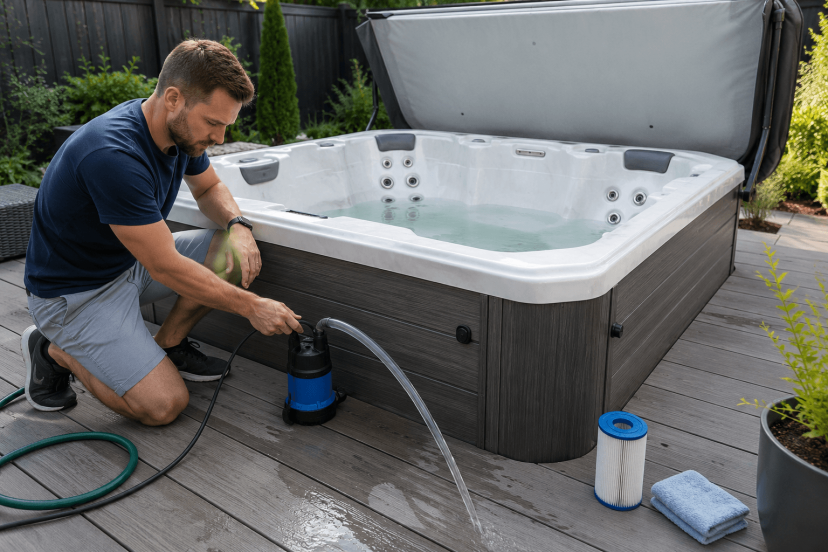
Option 2: Submersible Utility Pump
A submersible pump is usually the better option when speed matters.
Place the pump in the deepest part of the hot tub and attach its discharge hose. Route the hose to your chosen drainage area before switching the pump on.
Keep electrical connections dry, follow the pump instructions, and turn it off before it runs dry unless it has automatic low-water shutoff.
Jacuzzi notes that using a submersible pump can substantially shorten the draining process compared with relying on the spa’s built-in gravity drain.
Step 4: Remove Remaining Water
Some water usually remains in the footwell, seats, or recesses.
Use towels, a sponge, or a wet/dry vacuum to collect the final puddles. A wet/dry vacuum can be particularly useful for removing water from awkward low points in the shell.
Avoid dismantling pumps, heater unions, or internal plumbing unless your manufacturer specifically instructs you to do so.
Step 5: Clean the Hot Tub Shell
With the water removed, wipe down:
- Seats
- Floor and footwell
- Waterline
- Jet surrounds
- Filter compartment
- Headrest areas
- Corners and crevices
Use a non-abrasive cloth or sponge with a cleaner intended for spa surfaces.
The waterline deserves extra attention because body oils, lotions, cosmetics, and other residue commonly accumulate there.
Rinse cleaner away before refilling so residue does not cause foam or affect water chemistry.
Step 6: Inspect the Spa
While the tub is empty, check for:
- Cracks or unusual shell damage
- Loose or damaged jet faces
- Worn pillows
- Scale buildup
- Debris near suction fittings
- Damaged filter components
- Signs of leakage in the equipment area
Catching minor problems during a routine water change may help prevent more expensive repairs later.
How Long Does It Take to Drain a Hot Tub?
A built-in gravity drain may take an hour or longer. A utility pump can remove several hundred gallons much faster.
For example, a pump rated around 1,800 gallons per hour has enough theoretical capacity to move the water in many residential spas quickly. However, actual drainage speed will usually be lower because hose length, vertical lift, fittings, and other restrictions reduce flow.
Once most of the water has been pumped out, allow additional time for cleaning, rinsing, inspection, and refilling.
How to Refill a Hot Tub Correctly
Removing the old water is only half of the process. How you refill the spa matters because air trapped inside the plumbing can prevent pumps from priming correctly.
1. Close the Drain
Make sure the drain valve is completely closed and remove the utility pump.
Check the area around the drain cap or fitting to make sure it is secure before adding hundreds of gallons of fresh water.
2. Reinstall the Filter as Directed
Follow your manual for filter installation. Make sure the cartridge and filter compartment are clean before the new water begins circulating.
3. Fill Through the Recommended Point
Many spas are filled through the filter compartment or designated fill pipe to reduce trapped air. Jacuzzi specifically recommends using the designated filling location to help prevent airlocks.
Avoid assuming that the center of the spa is always the correct place for the hose. Follow the procedure for your specific model.
4. Fill to the Correct Waterline
Fill only to the manufacturer’s recommended waterline.
Too little water can interfere with circulation and jet performance. Too much can cause the tub to overflow when bathers enter.
5. Restore Power
Once the spa is properly filled, turn the breaker back on and watch the startup cycle.
Make sure water begins moving normally through the jets and circulation system.
If a pump runs but does not move water, makes an unusual sound, or the control panel displays a flow error, turn the system off and follow the manufacturer’s airlock or pump-priming instructions.
6. Rebalance the Water
Test the fresh water and adjust the chemistry for your specific water-care system.
A common order is:
- Total alkalinity
- pH
- Calcium hardness, if adjustment is needed
- Sanitizer
Jacuzzi’s maintenance guidance recommends maintaining spa pH around 7.2–7.6.
Allow the water to circulate, then retest before soaking.
Where Should You Drain Hot Tub Water?
Check your local water utility or municipality for disposal rules.
In general:
- Avoid storm drains unless local rules specifically permit discharge.
- Keep water away from neighboring property and building foundations.
- Do not saturate erosion-prone soil.
- Avoid dumping very hot or heavily treated water directly onto plants.
- Follow local requirements regarding sanitizer reduction or sanitary-sewer disposal.
Be especially careful if your spa uses a salt-water system, since repeatedly directing salty water onto landscaping can affect sensitive plants and soil.
Can You Drain a Hot Tub for Winter?
Draining alone is not the same as winterizing.
Even when the visible shell looks empty, water can remain inside pumps, heaters, manifolds, jet lines, and low sections of plumbing.
In freezing weather, trapped water can freeze, expand, and damage expensive components.
Proper winterization may require blowing or vacuuming water from lines and following model-specific procedures. If unsure, use a qualified spa technician.
Simply opening the drain and leaving the hot tub empty is not adequate winter preparation in climates where freezing temperatures occur.
Common Hot Tub Draining Mistakes
- Forgetting to shut off the power: Pumps and heaters may be damaged if they operate with too little water.
- Draining into the wrong location: Hundreds of gallons of water can flood landscaping, affect foundations, or violate local discharge rules.
- Using abrasive cleaners: Rough scrub pads and strong household chemicals may damage the shell or leave residues that create foam later.
- Letting a utility pump run dry: Turn off pumps without dry-run protection before they begin sucking air.
- Ignoring the filters and plumbing: Replacing the water will not remove buildup trapped inside dirty filters or internal lines.
- Refilling without considering airlocks: Follow the manufacturer’s fill procedure rather than simply dropping a garden hose anywhere inside the shell.
Final Thoughts
For many traditionally sanitized spas, plan a complete drain and refill roughly every three to four months, then adjust for usage and water quality.
The process is straightforward: purge the plumbing if needed, shut off power, drain the old water, clean and inspect the spa, refill through the recommended location, restore power, and rebalance the fresh water.
A submersible pump can make draining much faster, but the cleaning, inspection, and refill stages are what turn a simple water change into worthwhile preventive maintenance.
Regularly following this routine can make water easier to balance, keep the spa cleaner, and give you an opportunity to spot problems with filters, jets, surfaces, or equipment before they become larger issues.
Frequently Asked Questions
1. How often should I drain my hot tub?
For many chlorine- or bromine-treated spas, every three to four months is a common manufacturer recommendation. Drain sooner if heavy use, recurring foam, cloudiness, odors, or unstable water chemistry indicate that the water is no longer responding well to normal maintenance.
2. What is the fastest way to drain a hot tub?
A submersible utility pump is generally faster than the built-in gravity drain. Place the pump in the deepest area, connect the appropriate discharge hose, route the water to an approved location, and monitor the pump as the water level drops.
3. Can I drain hot tub water onto my lawn?
Sometimes, but only when local rules allow it and the water will not damage plants or create runoff. Very hot water, elevated sanitizer levels, and salt can potentially harm landscaping, so check local discharge guidance before using your lawn as the drainage area.
4. Do I need to turn off my hot tub before draining it?
Yes. Turn off power at the circuit breaker or spa disconnect before draining. Pumps and heaters can be damaged if they operate with too little water, and shutting off the system also reduces electrical risk while you work around the spa.
5. Why won’t my hot tub jets work after refilling?
An airlock may be preventing the pump from moving water. Turn the spa off if a pump is running without normal flow and follow the manufacturer’s priming or airlock-removal procedure. Filling through the designated filter area can help prevent this problem on many hot tub models.